
WELCOME BONUS 300%
UP TO €2000 + 100
FREE SPINS
UP TO €2000 + 100
FREE SPINS
Home → Games
Casino games at Surge Casino
Dozen 2:1 Hits 12 of 37 Numbers
A dozen bet in Roulette European covers 12 of the 37 pockets on the wheel and pays 2:1, while the straight-up bet on a single number pays 35:1. Because the wheel holds 37 pockets but the payouts are set as if there were 36, every bet type carries the same 2.70% house edge, so the RTP stays at 97.30% regardless of which bet is placed. On a €10 dozen bet the average cost is €0.27 per round, identical to the cost of a €10 straight-up bet.
Splitting the wheel into dozens gives a hit frequency of 12 in 37, or roughly one round in three, against 1 in 37 for a straight-up number. The 2:1 payout means a winning €10 dozen bet returns €20 profit plus the €10 stake, while the same €10 on a single number returns €350 profit when it lands. The trade-off is frequency against payout size, not a difference in the house edge, which remains 2.70% on both.
A column bet carries the same 2:1 payout and the same 12 of 37 coverage as a dozen, and odd/even, red/black and 1-18/19-36 all pay 1:1 across 18 pockets. The straight pays 35:1, the split 17:1, the street 11:1, the corner 8:1 and the six line 5:1. Across 100 € staked on dozens, the expected loss is 2.70 € at the 97.30% RTP.
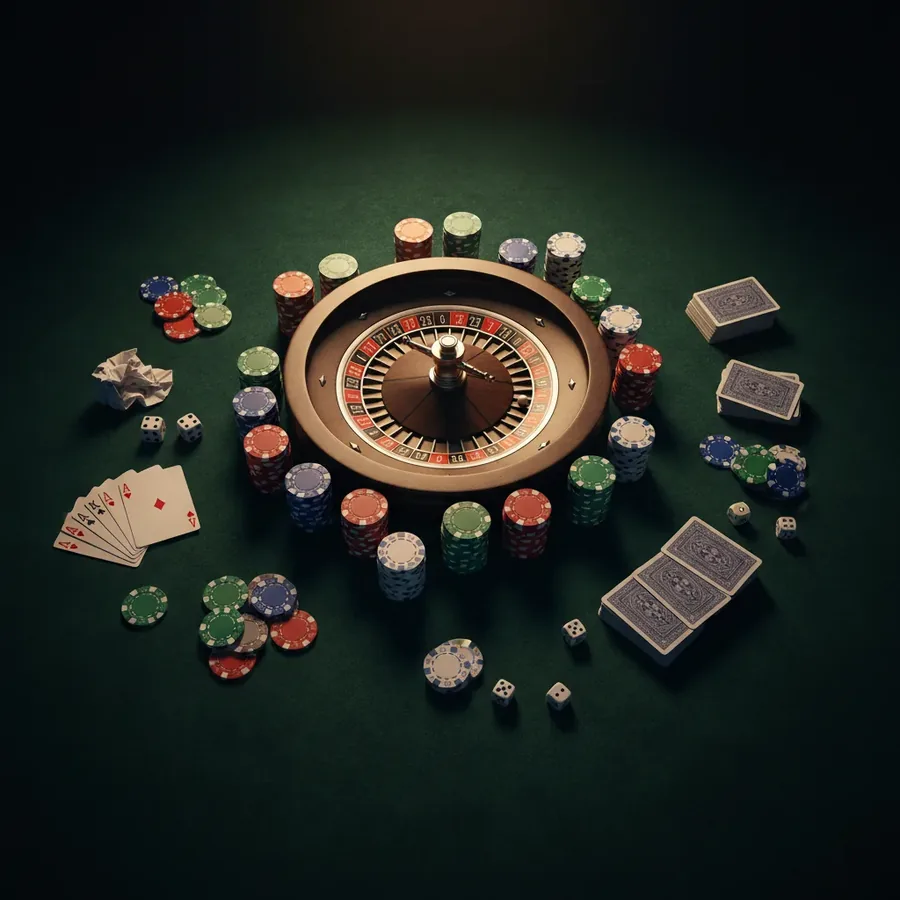
Straight-Up Pays 35:1, Split Pays 17:1
In the inside-bet family, the straight-up bet, known in French roulette as the plein, pays 35:1 on a single pocket, while the split, or cheval, covers two adjacent numbers and pays 17:1. A street covers three numbers at 11:1, a corner covers four at 8:1 and a six line covers six at 5:1. Every one of these bets sits on the same 37-pocket European wheel with an RTP of 97.30% and a house edge of 2.70%.
The pattern is consistent: doubling the coverage halves the payout, keeping the edge fixed at 2.70% across all inside bets. A €10 plein returns €350 profit when the number lands, while a €10 cheval returns €170 profit when either of its two numbers is drawn, and a €10 corner returns €80 profit from four numbers. The straight-up bet has the lowest hit frequency of the group at 1 in 37.
On Roulette French, the La Partage rule does not apply to inside bets, so the edge on the plein, cheval, street, corner and six line stays at the European level of 2.70%. Only the outside bets can benefit from the rule. A dozen bet and a column bet pay 2:1, while red/black, odd/even and 1-18/19-36 pay 1:1, and the RTP remains 97.30% on all of them.
The Craps Odds Bet: 0% House Edge
The Craps Free Odds bet in 3-4-5x mode is the only bet in the casino with a house edge of 0.00%, because it pays at true odds: point 4 or 10 at 2:1, point 5 or 9 at 3:2, and point 6 or 8 at 6:5. It can only be placed on top of a Pass or Don't Pass bet once a point has been set. Combined with the Pass Line in 3-4-5x mode, the overall RTP is 99.63% with a house edge of 0.37%.
The per-roll cost of the combined Pass plus odds position is 0.111%, and the edge falls as the odds multiple rises: 0.251% at 1x, 0.180% at 2x and 0.37% on the combined Pass with 3-4-5x. On a €100 Pass Line bet backed by full 3-4-5x odds, the expected loss per resolved round is €0.37 on the combined position, while the odds portion itself contributes nothing to the house.
Because the odds bet pays at true odds, a €10 odds bet behind a point of 6 returns €12 when the point is made, and the same €10 behind a point of 4 returns €20. The 0.00% edge applies only to the odds portion; the base Pass Line bet still carries the 0.37% combined figure. No other bet in the casino reaches a 0.00% house edge.
Taking Insurance: The Most Common Blackjack Mistake
Insurance in Blackjack pays 2:1 and is offered when the dealer shows an ace, but the bet sits outside the standard 3:2 blackjack payout and the 1:1 regular win. In the 6-deck S17, DAS, DOA game with a 3:2 payout and basic strategy, the RTP is 99.54% with a house edge of 0.46%. The insurance side bet is not part of that figure and carries its own separate cost.
A side bet is an optional extra wager placed alongside the main bet, and insurance is the classic example in Blackjack. Replacing the 3:2 blackjack payout with 6:5 pushes the house edge from 0.46% to 1.85%, a jump of 1.39 percentage points, which is larger than any other single rule change. On a €10 bet a blackjack at 6:5 pays €12 instead of €15, a difference of €3 per blackjack.
Single deck Blackjack under classic rules with a 3:2 payout reaches an RTP of 99.85% and a house edge of only 0.15%, roughly 0.48 percentage points lower than an 8-deck equivalent. The 6-deck S17, DAS, DOA game at 3:2 sits at 99.54%, while the same 6-deck game at 6:5 drops to 98.15%. Insurance returns 2:1 on the side bet and does not change these main-game figures.
Corner Pays 8:1, Dozen Only 2:1
A corner bet in Roulette European covers four numbers and pays 8:1, while a dozen bet covers 12 numbers and pays only 2:1. The six line covers six numbers at 5:1, the street covers three at 11:1, the split covers two at 17:1 and the straight covers one at 35:1. All of these bets share the same 37-pocket wheel, the same 2.70% house edge and the same 97.30% RTP.
The payout scales inversely with coverage: 4 numbers at 8:1 pays less per hit than 2 numbers at 17:1, which pays less than 1 number at 35:1. A €10 corner returns €80 profit when any of its four numbers lands, while a €10 dozen returns €20 profit when any of twelve numbers lands. Expected loss across 100 € staked is 2.70 € on either bet at the 97.30% RTP.
Outside bets on the same wheel include red/black, odd/even and 1-18/19-36 at 1:1, plus column at 2:1 alongside dozen. On Roulette French the inside bets — straight, split, street, corner and six line — do not receive La Partage, so the edge stays at 2.70% on those. The 8:1 corner payout is set against four pockets in 37.
Game categories at a glance
| Category | Examples | Stakes From | Highlight |
|---|---|---|---|
| Slots | Mega Moolah, Dragon's Luck, Big Bass Bonanza | 0.10 EUR | thousands of titles |
| Table games | Roulette, Blackjack, Baccarat | 0.50 EUR | classic rules |
| Live casino | XXXtreme Lightning Roulette, Blackjack Party | 0.20 EUR | real dealers |
| Jackpot games | Mega Moolah, Divine Fortune, Age of the Gods | 0.20 EUR | progressive pools |
| Instant games | Aviator, Plinko, Mines | 0.10 EUR | fast rounds |
| Video poker | Jacks or Better, Deuces Wild | 0.25 EUR | strategy based |
Straight-Up 35:1 Against 1-in-37 Odds
A straight bet on the European roulette wheel pays 35:1, while the chance of the single number landing is exactly 1 in 37. The payout is set as if the wheel had only 36 pockets, which leaves the casino with one extra pocket over the true odds. On a 100 € stake split into single-number bets, the expected return stays at 97.30 %, matching the RTP for every bet on the European wheel.
The same 35:1 payout applies to the French roulette inside bets, where La Partage does not cover straight, split, street, corner or six line wagers. A player who places 37 straight bets of 1 € each and hits one number receives 35 € in winnings plus the original 1 € stake back. That leaves a 1 € shortfall against the 37 € total staked, which is the 2.70 % house edge expressed in money.
Compared with the American wheel, the straight bet on 37 pockets is materially cheaper for the player. The American five number bet returns only 6:1 while covering five of 38 pockets, producing a 7.89 % house edge and an RTP of 92.11 %. That is 4.11 percentage points of RTP worse than the European straight bet, which is why the five number bet is considered a trap bet.
Roulette Wheels: 37 vs 38 Pockets
A European roulette wheel carries 37 pockets: the numbers 1 through 36 plus a single zero. The American version adds a second zero, taking the total to 38 pockets, and the additional pocket raises the house edge from 2.70 % to 5.26 % on most bets. For every 100 € staked, the European wheel keeps 2.70 € on average, while the American wheel keeps 5.26 € on standard outside and inside bets.
The American five number bet, covering 0, 00, 1, 2 and 3, is the only wager on the 38-pocket wheel with an edge above 5.26 %. It pays 6:1 and carries a house edge of 7.89 %, which translates to an RTP of 92.11 %. No equivalent bet exists on the 37-pocket wheel, because there is no second zero and therefore no five-number combination that fits the same payout structure.
The difference between 37 and 38 pockets changes the long-run cost of every outside bet as well. Red/black, odd/even and 1-18/19-36 each pay 1:1 on both wheels, but the extra zero pocket means a red bet on the American wheel wins on 18 of 38 spins instead of 18 of 37. The European wheel therefore returns 97.30 % RTP on those bets, against 94.74 % on the American version without the five number exception.
A 2.70% House Edge: 2.70 EUR per 100 EUR
The house edge on the European roulette wheel is 2.70 %, which means the casino keeps on average 2.70 € for every 100 € staked over the long run. That figure applies uniformly to straight, split, street, corner, six line, dozen, column, red/black, odd/even and 1-18/19-36 bets. The uniformity exists because every payout is calculated as if there were 36 pockets, while the wheel actually has 37.
The same 2.70 % edge applies to French roulette inside bets, because La Partage or En Prison only affects even-money outside bets and does not cover straight, split, street, corner or six line wagers. A player staking 100 € across any mix of inside bets on the French wheel can still expect an average loss of 2.70 €, with an RTP of 97.30 %.
By comparison, the Sic Bo small and big bets under Atlantic City rules carry a house edge of 2.78 %, just 0.08 percentage points higher than European roulette. The small bet covers totals of 4 through 10, the big bet totals of 11 through 17, and any triple loses both. That 2.78 % edge means 100 € of stakes costs 2.78 € on average, while the same sum on European roulette costs 2.70 €.
Doubling Down: Twice the Stake, One More Card
Doubling down in blackjack allows a player to double the original bet after the first two cards, but only one additional card is dealt. In the six-deck game with S17, DAS and DOA, doubling is permitted on any first two cards, and doubling after a split is also allowed. This rule set, combined with a 3:2 blackjack payout and basic strategy, produces a house edge of 0.46 % and an RTP of 99.54 %.
The value of the double down becomes clear when the blackjack payout is changed. A six-deck game that pays 6:5 instead of 3:2 raises the house edge from 0.46 % to 1.85 %, adding exactly 1.39 percentage points to the casino's advantage. That single rule change is more expensive than the double-down rules themselves, and it turns a 10 € blackjack from a 15 € win into a 12 € win.
A single-deck blackjack game with classic rules and a 3:2 payout reduces the house edge to 0.15 %, with an RTP of 99.85 %. Fewer decks lower the edge by roughly 0.48 percentage points compared with eight decks, but many operators offset that advantage by switching the blackjack payout to 6:5. The double down option still requires only one card, regardless of the number of decks or the payout change.
Variance at the Table: 1:1 vs 35:1
Roulette offers two very different payout structures: even-money bets pay 1:1, while a straight bet pays 35:1. The 1:1 outside bets on the European wheel hit on 18 of 37 spins, producing an RTP of 97.30 % with relatively steady results. The 35:1 straight bet hits on only 1 of 37 spins on average, which means long losing runs are common even though the RTP remains at 97.30 %.
A player who stakes 1 € on red for 37 spins can expect 18 wins of 1 € each and 19 losses, for a net loss of 1 €. A player who stakes 1 € on a single number for 37 spins can expect one win of 35 € plus the 1 € stake back, and 36 losses, also for a net loss of 1 €. The average cost is identical at 2.70 € per 100 € staked, but the path to that result is far more uneven with the straight bet.
The same principle applies to video poker pay tables. Jacks or Better 9/6 pays 1:1 for a pair of jacks or better and 800:1 for a royal flush, with an RTP of 99.54 % and a standard deviation of 4.42. The 8/5 short pay version cuts the full house from 9 to 8 and the flush from 6 to 5, dropping the RTP to 97.29 % and lifting the house edge to 2.71 %, close to European roulette.
Split, Double, and Surrender: Three Decisions Explained
A split is available when the first two cards in a blackjack hand have the same value. In the six-deck game with S17 and DAS, doubling after a split is allowed, which changes the arithmetic of pair splitting. The house edge for this rule set sits at 0.46% when basic strategy is followed, compared with 1.85% if the blackjack payout is cut to 6:5.
Doubling down lets a player double the original stake after receiving the first two cards. The rule DOA means double down on any first two cards is permitted, not just on hard totals of 9, 10 or 11. On a €10 bet, a successful double down at 1:1 returns €20 in total instead of €10, but it also exposes twice the stake to the same dealer upcard.
Surrender is not part of this six-deck game. The rule set lists no surrender, so a player cannot forfeit half the bet after the dealer checks for blackjack. That absence matters because surrender is one of the few player options that lowers variance in bad spots, and its removal keeps the edge at the stated 0.46% only when basic strategy is applied on every other decision.
Jacks or Better: Check Payout Table Before Betting
The 9/6 Jacks or Better pay table returns 99.54% RTP with optimal strategy, which equals a house edge of 0.46%. The notation 9/6 means a full house pays 9 units and a flush pays 6 units per coin. A natural royal flush pays 800 for one coin, but the 4,000-coin jackpot requires the maximum bet of five coins.
The 8/5 short pay table drops the full house to 8 units and the flush to 5 units. That two-unit cut costs exactly 2.25 percentage points of RTP, taking the game from 99.54% down to 97.29% and lifting the house edge to 2.71%. Intermediate tables exist at 9/5 with 98.45%, 8/6 with 98.39%, 7/5 with 96.15% and 6/5 with 94.99%.
The standard deviation for full-pay 9/6 Jacks or Better is 4.42, which describes how widely session results can swing around the long-run average. The RTP figure is a theoretical average over hundreds of thousands of hands, never a forecast for one sitting. A player who skips optimal strategy on a single common hold decision pushes the return below the published 99.54%.
European Roulette: 2.70% House Edge
European roulette with a single zero keeps 2.70% of every stake on average, which equals an RTP of 97.30%. The wheel has 37 pockets numbered 1 through 36 plus the 0. Payouts are calculated as if the wheel had only 36 pockets, so the missing pocket creates the same 2.70% edge on every bet from a straight to an even-money wager.
The payout schedule runs from 35:1 for a straight bet down to 1:1 for red or black, odd or even, and the 1–18 or 19–36 ranges. A split pays 17:1, a street 11:1, a corner 8:1, a six line 5:1, and a dozen or column 2:1. On €100 of total stakes, the average retained amount is €2.70 regardless of which of these bets the player chooses.
The five-number bet on an American wheel is the comparison point at 7.89% house edge and 92.11% RTP. That bet covers 0, 00, 1, 2 and 3, and no equivalent exists on the European wheel. The European single-zero layout therefore removes the worst standard roulette wager and leaves every available bet at the uniform 2.70% edge.
Game Shows: Sectors, Multipliers and Bet Ranges
Live game shows expose bets to fixed sectors and random multipliers, and the house edge on those wagers depends on the pay table rather than on the wheel layout alone. The Sic Bo special bets show how wide that spread can be: the single number bet carries 7.87% edge, while the specific double reaches 18.52%. The any triple sits at 13.89% and the specific triple at 16.20%.
The Sic Bo small and big bets under Atlantic City rules hold the best edge in that game at 2.78%, with an RTP of 97.22%. Small covers totals of 4 through 10 and big covers 11 through 17, but any triple loses both bets. That 2.78% figure is only slightly above the European roulette edge of 2.70% and far below the 10.36% on a baccarat pair side bet.
A multiplier does not change the underlying probability of a sector; it only changes the payout when that sector lands. The baccarat pair side bet pays 11 for 1, which is 10:1 on the actual stake, yet the house edge remains 10.36% because the first two cards form a pair far less often than the payout suggests. Multipliers and boosted odds therefore have to be read against the base probability, not in isolation.
Contact
Live - online chat
Banking









Providers












Surge Casino 2026